Tracing Payment Pathways and Provider Adaptations in Regulated Mobile Table Environments
Mia Baumann · Aug 26, 2026
Tracing Payment Pathways and Provider Adaptations in Regulated Mobile Table Environments
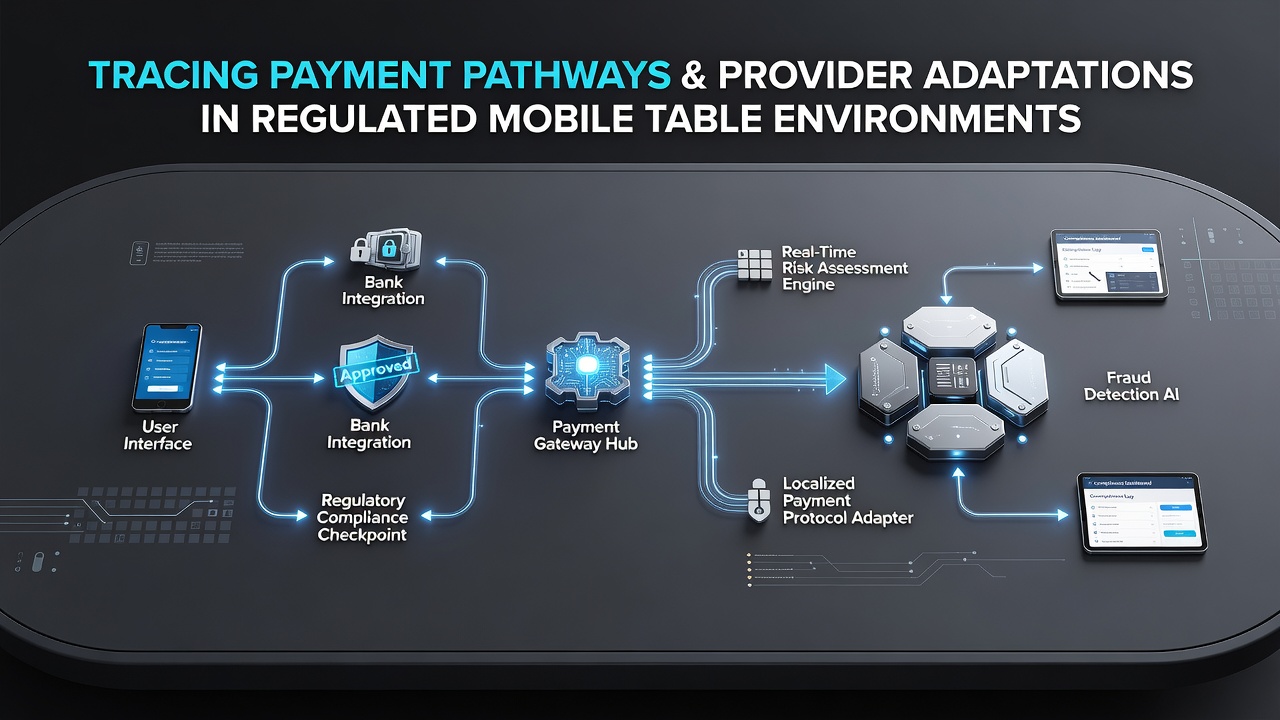
Regulated mobile table environments encompass live dealer games such as blackjack and roulette delivered through smartphones and tablets, and payment pathways in these settings follow strict compliance chains that begin with player verification and end with settlement at licensed operators. Data from multiple jurisdictions shows that transaction routes typically route through certified payment processors, banking partners, and anti-money laundering systems before funds reach game servers, while providers adjust their infrastructure to meet varying regional mandates on speed, security, and reporting.
Mapping Core Payment Routes
Payment initiation starts when a user selects a deposit method within a mobile application, after which the system directs the request to an integrated gateway that performs real-time checks against regulatory blacklists and velocity limits. Studies from payment security firms indicate that e-wallet transfers, bank cards, and instant bank payments dominate usage in these environments, yet each channel carries distinct audit trails that operators must preserve for up to seven years under most licensing conditions. And providers often embed additional encryption layers at the application level so that data packets traveling between the device and the payment processor remain isolated from the game engine itself.
Once authorization clears, funds move along segregated accounts maintained by the operator, a structure that separates player balances from operational capital and reduces exposure during settlement disputes. Figures released by the Australian Transaction Reports and Analysis Centre reveal that transaction monitoring in mobile table settings flagged fewer than 0.3 percent of deposits for manual review in 2025, a statistic that reflects automated screening tools now standard across licensed platforms. Those who've examined these flows note that the pathway continues through currency conversion modules when cross-border play occurs, with exchange rates locked at the moment of authorization rather than at final settlement.
Provider Adjustments to Regulatory Shifts
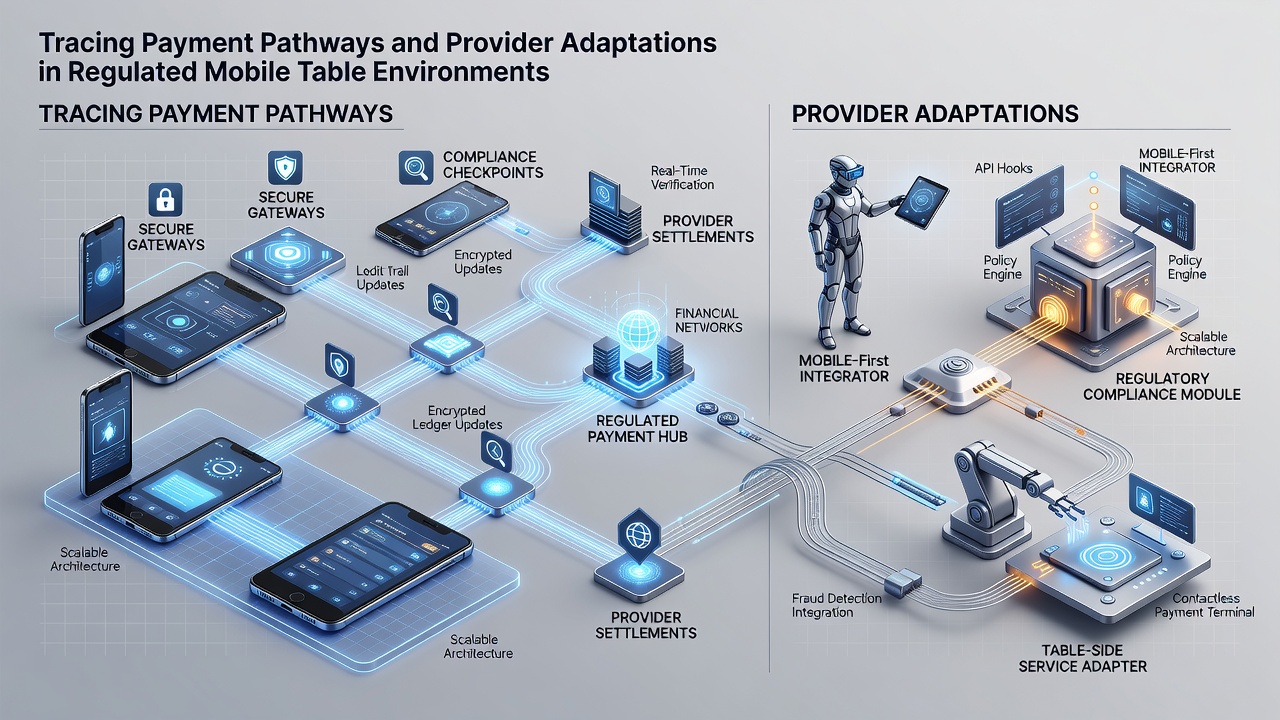
Operators have responded to tightening rules by modularizing their payment stacks, allowing individual components such as fraud scoring engines or reporting dashboards to update without full system restarts. In August 2026 several North American and European markets implemented synchronized reporting formats that require providers to transmit transaction metadata in standardized XML schemas within four hours of each completed round, a change that prompted many suppliers to adopt cloud-based compliance layers capable of handling peak mobile traffic volumes. Research conducted by the University of Nevada Reno gaming laboratory found that platforms using these modular architectures reduced downtime during regulatory audits by an average of 42 percent compared with legacy monolithic systems.
Adaptations also extend to user interface elements, where payment confirmation screens now display mandatory responsible gaming messages and session timers before any table game round begins. Providers integrate these prompts directly into the transaction confirmation sequence so that players encounter them at the precise moment funds transfer rather than as a separate pop-up later in the session. Observers note that this placement improves completion rates for the required acknowledgments while keeping the overall flow within acceptable latency thresholds for live dealer environments.
Security and Compliance Integration Points
Encryption standards have converged around TLS 1.3 combined with device-specific tokenization, which replaces sensitive card details with unique identifiers that expire after each session. Industry reports compiled by the Canadian Gaming Association document a steady decline in payment-related incidents across regulated mobile table offerings since these token systems became mandatory in 2024, with incident rates dropping below one per 50,000 transactions. Providers further embed geofencing logic that cross-checks device location against licensed jurisdictions before authorizing any movement of funds, a step that occurs in parallel with identity verification rather than sequentially.
Live table environments introduce extra complexity because real-time dealer interactions generate continuous data streams that must remain synchronized with payment ledgers. Suppliers therefore maintain separate audit channels for gameplay events and financial events, ensuring that any discrepancy between bet amounts and settled outcomes triggers immediate reconciliation protocols. Data indicates that such dual-channel logging has become a baseline requirement in licensing applications submitted after mid-2025, particularly in markets that permit both domestic and international player pools.
Regional Variations in Pathway Design
European operators frequently route payments through centralized clearing houses that aggregate transactions across multiple brands before final settlement with banks, whereas North American platforms more commonly maintain direct processor relationships that allow faster same-day payouts but require stricter per-transaction reporting. Australian frameworks emphasize source-of-funds declarations for deposits above certain thresholds, prompting providers to insert additional verification steps into the mobile checkout flow without extending average completion time beyond eight seconds. Those who've compared these models point out that each region prioritizes different risk vectors, yet all demand immutable logs that regulators can query on demand.
Cross-border play introduces currency and tax considerations that providers address through automated withholding modules triggered at the point of withdrawal rather than deposit. These modules reference current treaty rates and automatically generate the necessary forms for players, reducing manual support tickets while satisfying reporting obligations to multiple tax authorities simultaneously.
Conclusion
Payment pathways in regulated mobile table environments continue to evolve alongside licensing requirements, with providers adopting modular architectures, enhanced encryption, and region-specific compliance tools to maintain operational continuity. Data from government agencies and academic studies shows measurable reductions in processing incidents and audit times as these adaptations mature, and ongoing synchronization of reporting standards across jurisdictions promises further streamlining of transaction oversight in the years ahead.